Industrial Koji Handling for Soy Sauce Breweries | Moromi Pulse
Practical koji room handling guidance for soy sauce breweries: moisture control, aeration discipline, transfer design, contamination prevention, and batch consistency.
Request pricing Practical koji room handling guidance for soy sauce breweries: moisture control, aeration discipline, transfer design, contamination prevention, and batch consistency.
Request pricingKoji handling is where traditional soy sauce quality becomes industrial discipline. Before moromi develops its depth, the brewery must protect a living, heat-producing culture through moisture control, aeration, transfer, and hygiene decisions that are often made under production pressure.
For fermentation managers, the goal is not simply to finish a koji cycle. The goal is to deliver koji into brine with predictable aroma, balanced proteolysis potential, manageable clumping, and a microbial profile that supports the intended fermentation path. Good koji room practice reduces downstream variability in nitrogen release, mash viscosity, filtration behavior, and final flavor consistency.
Moromi Pulse works with soy sauce breweries where heritage quality and plant-floor repeatability must coexist. This article focuses on non-enzyme handling fundamentals that support consistent fermentation performance.
Industrial koji is not a static ingredient. It is a biological process moving through temperature rise, moisture migration, oxygen demand, and surface growth. Small deviations during handling can become larger deviations later in moromi.
Common downstream symptoms of uneven koji handling include:
When breweries investigate these issues, attention often moves directly to brine ratio, fermentation time, microbial culture, or processing aids. Those matter. But the koji room often explains why the same recipe behaves differently from one batch to the next.
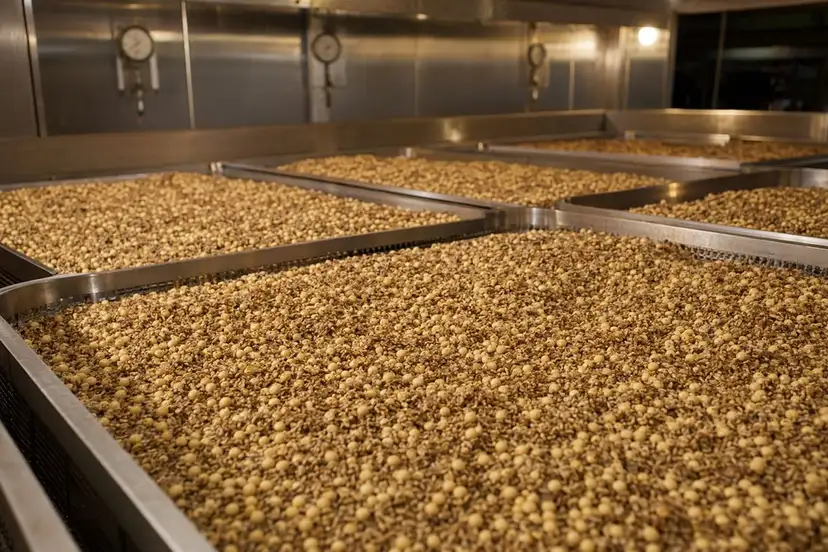
Moisture is one of the strongest drivers of koji uniformity. Too little moisture can restrict growth and reduce the formation of desirable enzymatic potential within the koji. Too much moisture can compact the bed, reduce oxygen flow, increase local heating, and create conditions for unwanted organisms.
A controlled koji room should focus on:
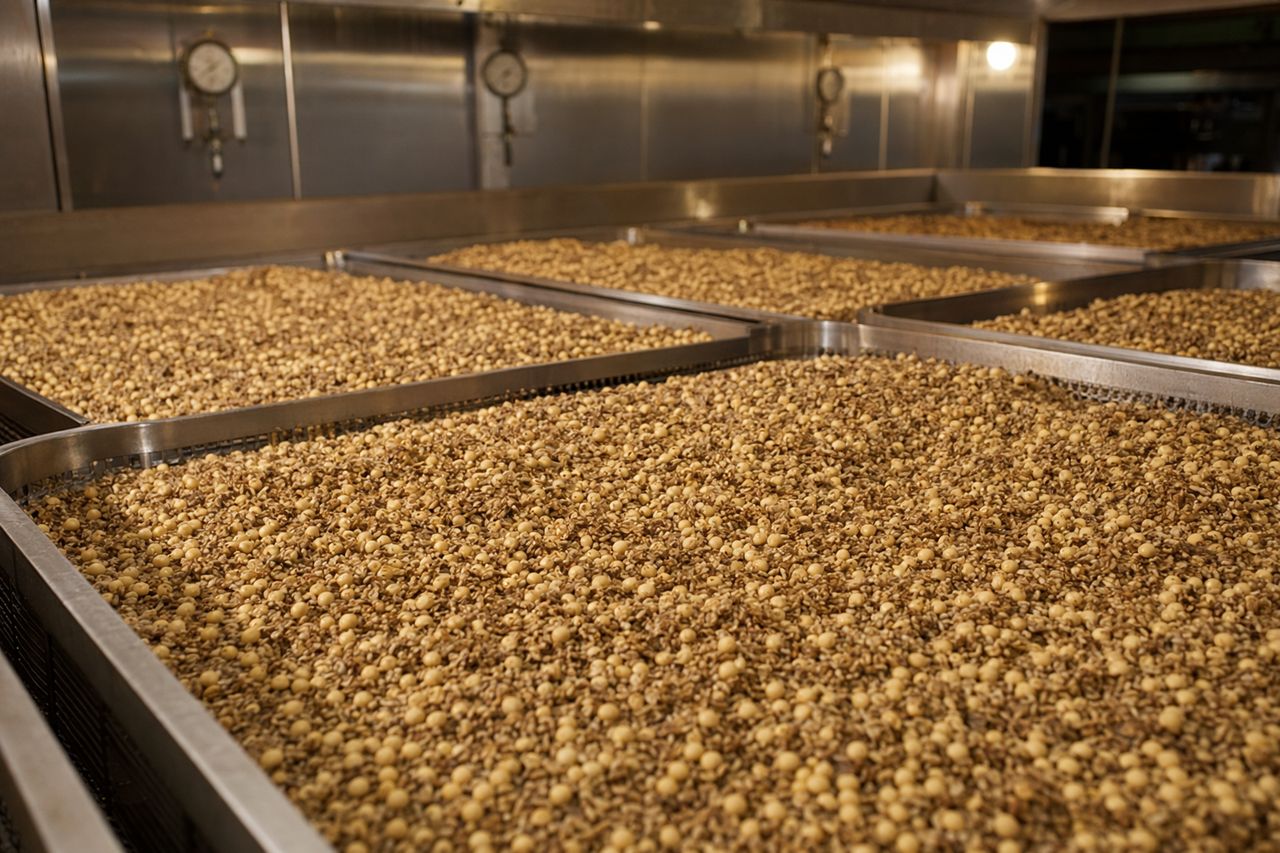
The most useful operating question is simple: does the koji bed behave the same way across its full working area? If one section dries early while another remains damp and heavy, the downstream moromi will carry that variation forward.
Average moisture can look acceptable while the bed is still operationally uneven. In industrial systems, localized wet zones are often more important than the batch average because they influence temperature, aeration, clumping, contamination risk, and discharge behavior.
Operators should document visible distribution patterns, not only instrument readings. Photographs, bed-depth notes, and discharge observations can be valuable batch records when troubleshooting later fermentation behavior.
Koji growth produces heat. Aeration supports oxygen demand and helps remove heat, but too much air movement can dry surfaces, create gradients, and disturb stable growth. Industrial aeration is therefore a balancing act, not a maximum-output setting.
Fermentation teams should watch for:
A well-managed aeration program should produce controlled growth without creating a dry top layer and a wet, oxygen-limited lower layer.
Bed depth changes airflow resistance. If fill height varies between production runs, the same aeration setting may not produce the same biological result. Standardizing bed depth is one of the most practical ways to improve repeatability without changing the core process.
For breweries scaling from semi-manual koji handling to larger systems, bed geometry deserves early attention. Transfer chutes, spreaders, and leveling routines can influence aeration performance as much as fan settings.
Koji transfer is often treated as logistics. In reality, it is a quality step.
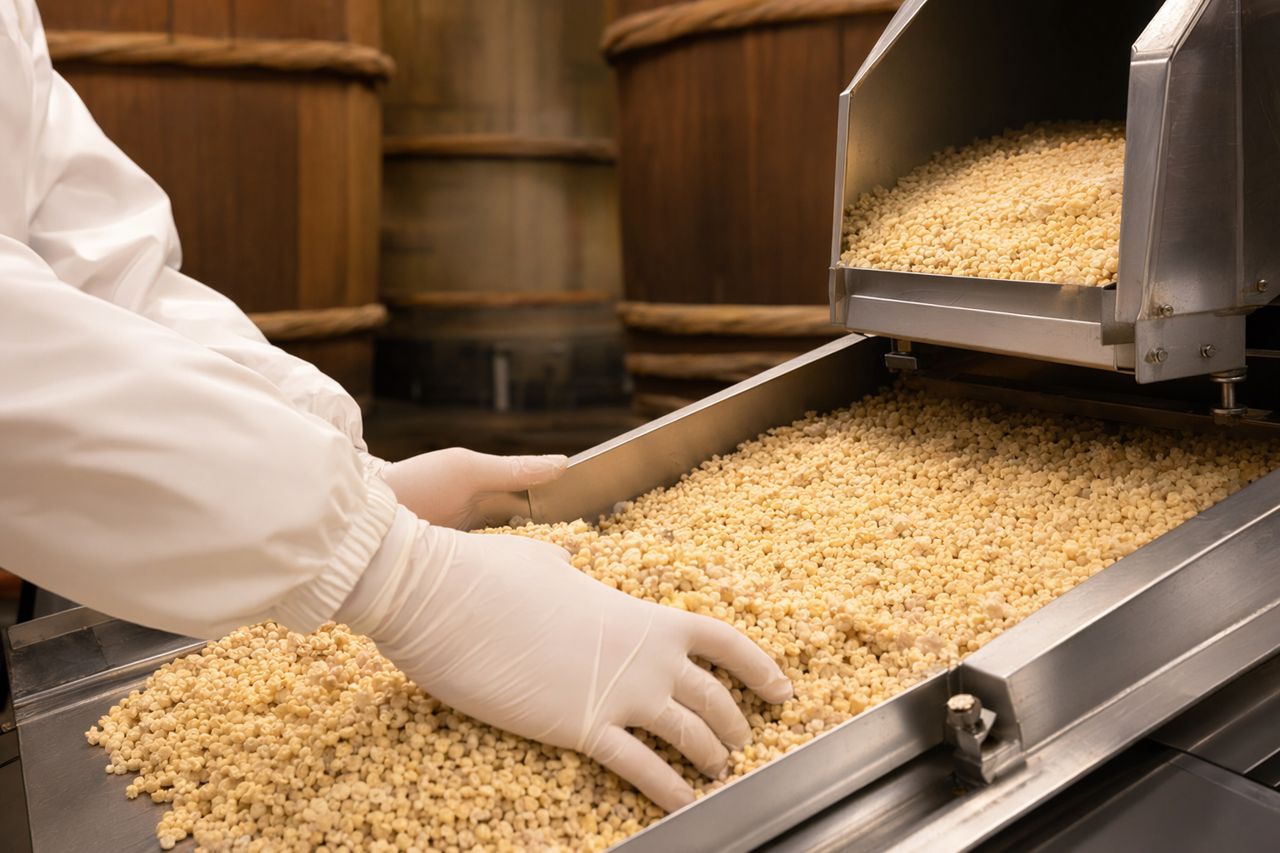
Rough transfer can crush grain structure, create fines, smear wet material, and increase compacted zones in the receiving vessel. Poor transfer timing can also expose warm koji to uncontrolled air, slowing the transition into brine and raising contamination exposure.
The best transfer system is not always the fastest. It is the one that moves koji predictably while preserving its physical condition and microbiological integrity.
Contamination control in koji handling is not only about emergency response. It is about making routine work difficult to do incorrectly.
Soy sauce breweries operate with high-salt fermentation downstream, but koji handling happens before the full protective effect of brine. This makes the koji room a critical hygiene zone.
A practical contamination program should cover:
The most important contamination prevention measure is consistency. A procedure that depends on personal memory will drift. A procedure built into room layout, tool placement, signage, and batch records is more likely to hold under shift pressure.
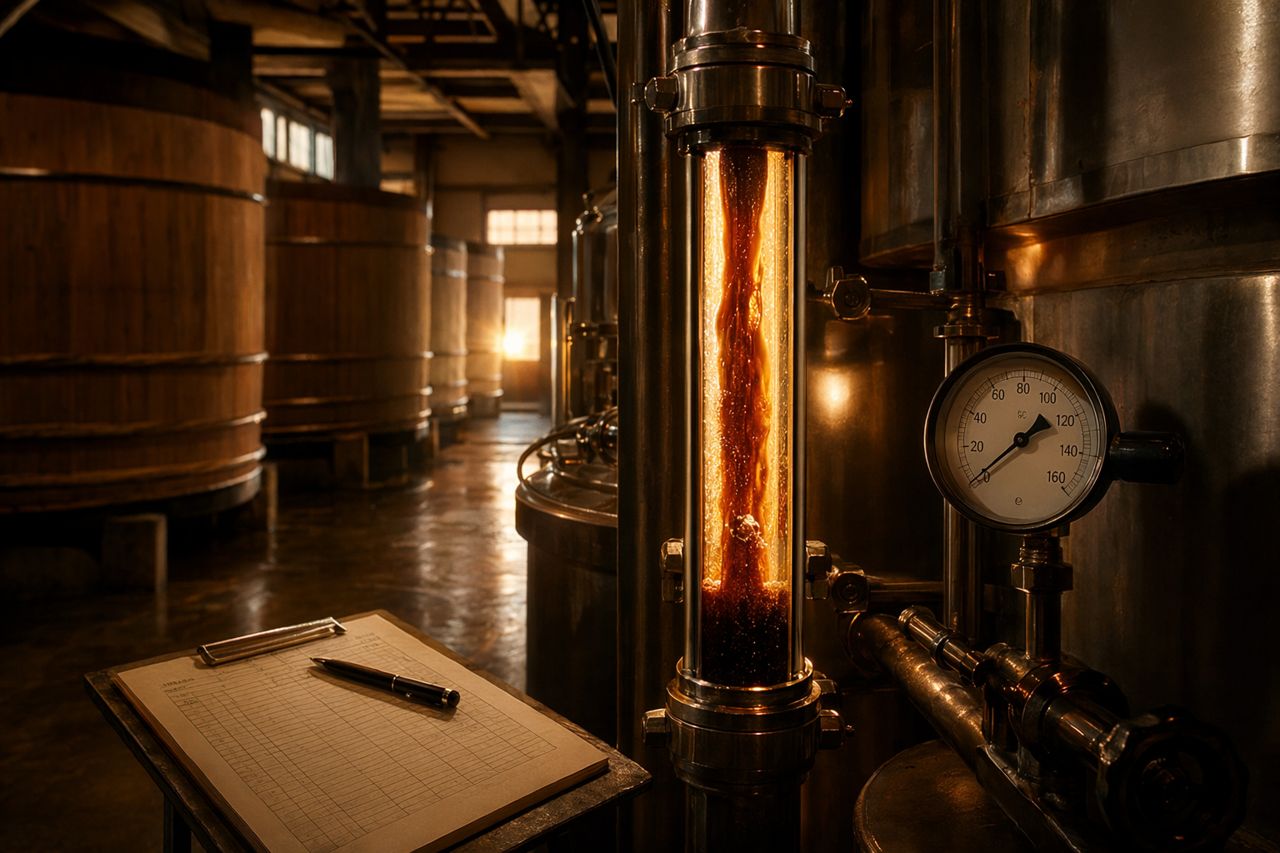
Koji room records should be useful for downstream decisions, not only compliance. The strongest records connect handling conditions to moromi performance.
Track the following in a consistent format:
When a batch later shows unusual fermentation speed, viscosity, aroma, or filtration performance, these notes help separate raw material variation from handling variation.
Not every soy sauce brewery is optimizing for the same product profile. Light-color styles, long-aged products, high-umami targets, and rapid-turn industrial programs each place different demands on koji consistency.
Koji handling should therefore be reviewed against the target moromi behavior:
These questions help move troubleshooting from opinion to evidence.
This article focuses on koji handling, not enzyme application. Still, breweries evaluating an enzyme supplier for soy sauce fermentation should first understand their baseline koji discipline. Enzyme programs perform best when the plant can identify whether variability comes from raw material, koji room handling, brine management, fermentation conditions, or downstream separation.
In practical terms, clean koji data makes technical support more useful. It allows supplier discussions to focus on specific buyer outcomes: consistent umami development, controlled mash viscosity, reliable fermentation time, smoother filtration, and repeatable batch economics.
Use this as a starting point for internal review:
Strong koji handling is quiet work. It shows up as fewer surprises: steadier moromi texture, cleaner aroma progression, more predictable filtration, and less corrective blending. It also gives fermentation managers a stronger foundation for any future process optimization.
Moromi Pulse supports soy sauce breweries with technical enzyme solutions built around real fermentation constraints. If your team is reviewing koji discipline, nitrogen development, mash viscosity, or filtration behavior, use the on-site request a quote form to start a practical technical conversation with Moromi Pulse.
Tell us your application and volume — we reply with pricing and lead time.