Why Koji Mash Hydrolysis Becomes the Hidden Bottleneck in Modern Soy Sauce Plants
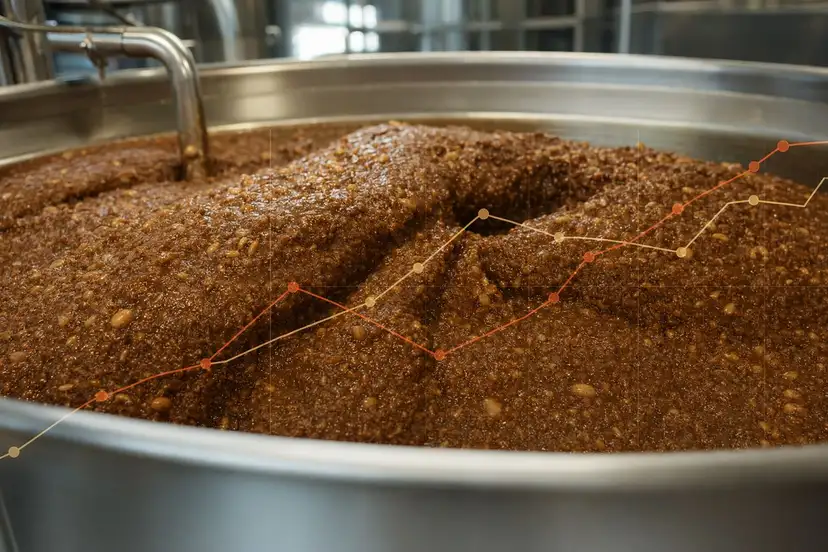
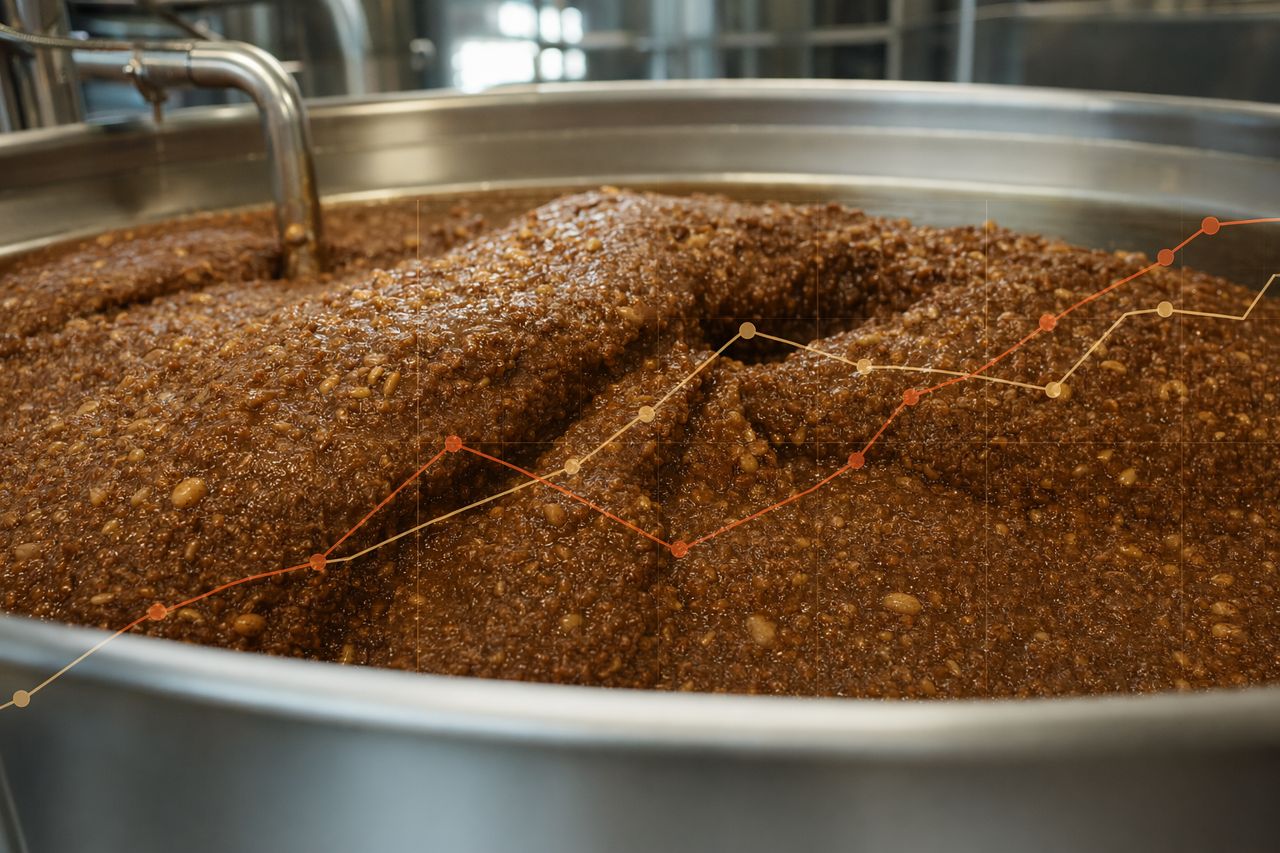
Modern soy sauce plants are often strong at the visible controls: raw material intake, koji room discipline, brine preparation, tank scheduling, pressing, clarification, and blending. Yet one constraint frequently sits deeper in the process. It is not a single valve, filter, or fermentation tank. It is the way the koji mash breaks down.
For a fermentation manager, hydrolysis is where raw material structure becomes soluble value. Protein and starch must open at the right pace. The mash must remain workable. Nitrogen release must support the target flavor profile without pushing the process into instability. When hydrolysis is uneven, the entire plant feels it: heavier moromi, slower maturation signals, filtration drag, wider batch variation, and more corrective work downstream.
This is why enzyme strategy deserves plant-floor attention. As an enzyme supplier for soy sauce fermentation, Moromi Pulse focuses on practical outcomes: consistent umami development, controlled mash viscosity, dependable soluble nitrogen formation, and fewer surprises between batches.
The bottleneck is often structural, not simply biochemical
In many breweries, hydrolysis problems are treated as if they are only a question of time. Extend fermentation. Adjust temperature. Blend around the variation. Wait for the tank to catch up.
But the underlying cause is often structural. Soybean and wheat preparation, steaming intensity, roasting profile, grind distribution, koji penetration, salt contact, and mash mixing all influence how accessible the substrate becomes. If the mash enters fermentation with uneven openness, even a well-run tank can show delayed or inconsistent breakdown.
The result is familiar:
- protein-rich particles that release nitrogen slowly;
- pockets of dense mash that resist uniform fermentation;
- viscosity that complicates mixing and transfer;
- variable aroma development across tanks;
- slower filtration or pressing behavior;
- higher dependence on blending to meet specification.
The hidden bottleneck is not that the brewery lacks fermentation skill. It is that the mash may not be hydrolyzing evenly enough for the plant’s current throughput expectations.
Why traditional quality standards make control harder, not easier
Soy sauce production is expected to respect heritage flavor. Operators cannot simply accelerate breakdown at any cost. Too aggressive a process can flatten character, shift aroma balance, or create a profile that feels technically efficient but organoleptically wrong.
That tension matters. The goal is not maximum breakdown. The goal is controlled conversion that supports the brewery’s chosen style.
A disciplined enzyme program should therefore work within the sensory boundaries of the plant. It should help release fermentable and flavor-relevant fractions while preserving the slower, layered development that gives soy sauce its depth.
For Moromi Pulse, that means enzyme support is evaluated through plant-relevant questions:
- Does the mash become more manageable without losing body?
- Does soluble nitrogen rise more predictably between batches?
- Does the flavor curve stay aligned with the house profile?
- Does the process reduce downstream pressure on pressing and filtration?
- Does the dosage approach remain practical for operators?
Four plant variables that shape hydrolysis performance
1. Heat history of soybeans and wheat
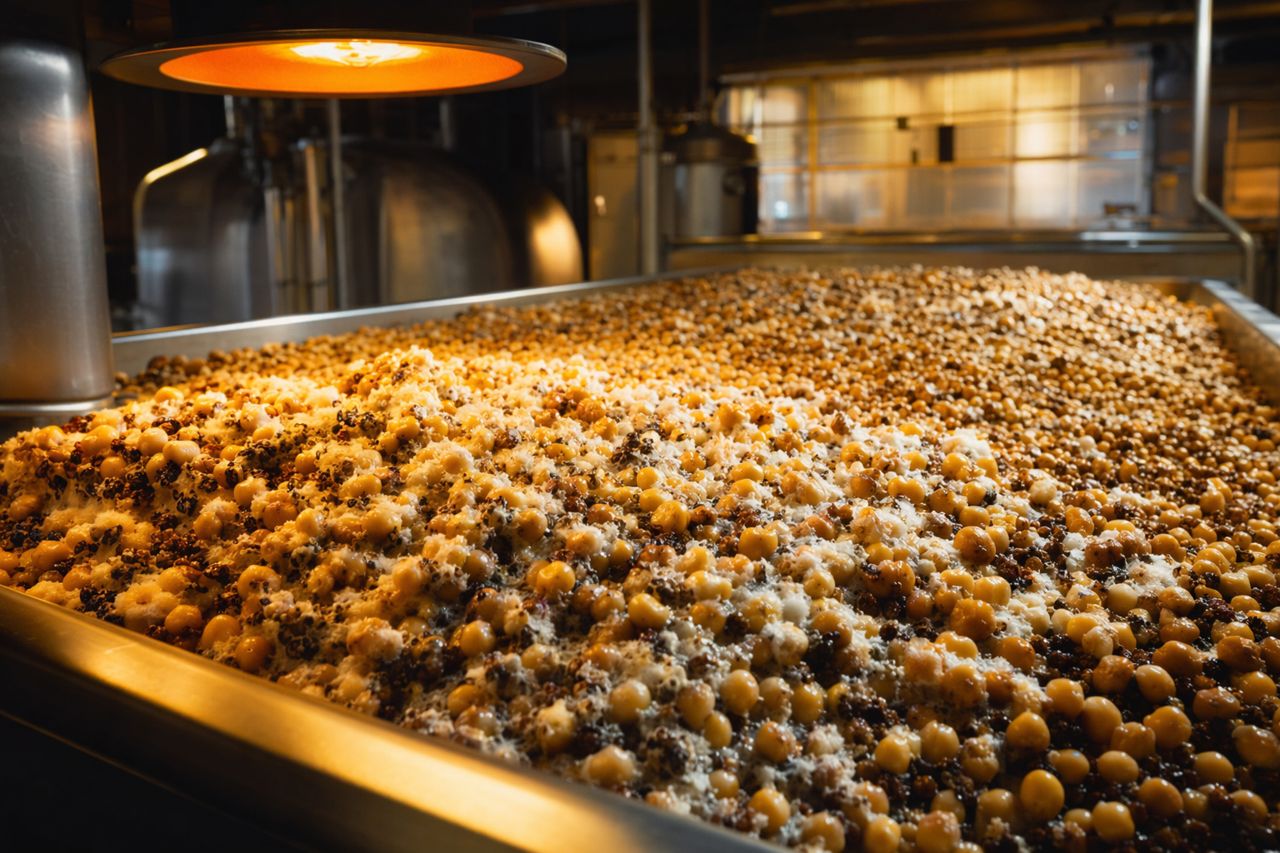
Steaming, roasting, and cooking choices set the physical condition of the substrate before koji ever begins its work. Underprepared material can remain resistant. Overprocessed material can compact, darken, or behave inconsistently in mash.
Heat history affects enzyme access. It also affects water uptake, particle integrity, and the way proteins and carbohydrates become available during fermentation. Two batches with the same recipe can behave differently if the heat profile shifted during preparation.
2. Particle size and mash distribution
Grain preparation influences surface area and flow. Too coarse, and hydrolysis may proceed slowly inside particles. Too fine, and the mash can become heavy, sticky, or difficult to separate later.
The practical concern is not a perfect particle size on paper. It is whether the mash structure supports uniform contact between substrate, brine, microorganisms, and supplemental enzyme functionality where used.
3. Koji growth and penetration
Good koji is not only about visible growth. Penetration and distribution determine how evenly the substrate has been conditioned for later breakdown. Patchy koji creates patchy hydrolysis. Strong outer growth with limited internal access can look acceptable but perform unevenly in moromi.
When tanks show inconsistent nitrogen release, the koji stage should be reviewed alongside fermentation conditions. Enzyme support can help stabilize conversion, but it should be matched to the real condition of the substrate entering the tank.
4. Salt and viscosity effects in moromi
Moromi is demanding. Salt concentration, suspended solids, limited mobility, and evolving viscosity all affect reaction behavior. As hydrolysis proceeds, the mash changes. It may loosen, thicken, separate, or resist circulation depending on the raw material and process design.
This is where dosage discipline becomes critical. Adding enzyme support without understanding mash movement can create inconsistent local effects. A practical program considers when and how the enzyme is introduced, how it disperses, and what operational checkpoints confirm that the tank is moving in the intended direction.
What the bottleneck looks like on the production floor
Hydrolysis bottlenecks rarely announce themselves as one clean failure. They appear as operating friction.
Fermentation managers may notice that one tank reaches target flavor development on time while another lags, despite similar records. Press operators may report heavier cake behavior or slower flow. Quality teams may see wider spread in amino nitrogen, color development, or sensory balance. Production planners may feel the impact as tank turns become less predictable.
These symptoms often get managed downstream. But if the root is uneven mash breakdown, downstream correction only hides the constraint. It does not remove it.
How enzyme support should be approached in soy sauce fermentation
Supplemental enzymes are not a shortcut around fermentation management. They are process tools. Used well, they can help a brewery reduce variability in substrate conversion and improve the predictability of moromi performance.
A practical enzyme program should begin with the plant’s actual constraints:
- raw material variation across crop lots;
- soybean cooking and wheat roasting profiles;
- koji room consistency;
- mash viscosity and mixing limitations;
- fermentation time targets;
- filtration or pressing capacity;
- required flavor and nitrogen specifications;
- operator workflow and dosing accuracy.
From there, enzyme selection and dosing strategy can be aligned with the intended business result. Some plants need stronger protein breakdown support. Others need better starch conversion balance, improved mash flow, or more stable batch-to-batch behavior. In most cases, the answer is not simply “more enzyme.” It is the right enzyme function, added at the right process point, with the right controls around it.
The business value: fewer surprises in the tank
For soy sauce breweries, the value of better hydrolysis control is measured in operational confidence.
When mash breakdown is more predictable, teams can make cleaner decisions. Tank scheduling becomes more dependable. Flavor development is easier to track. Filtration and pressing teams face fewer unexpected slowdowns. Quality teams spend less time explaining batch spread. Procurement and production can absorb raw material variation with less disruption.
This is especially important for plants under pressure to increase throughput without compromising traditional quality standards. Capacity gains do not always come from adding tanks. Sometimes they come from removing uncertainty inside the tanks already on the floor.
Where Moromi Pulse fits
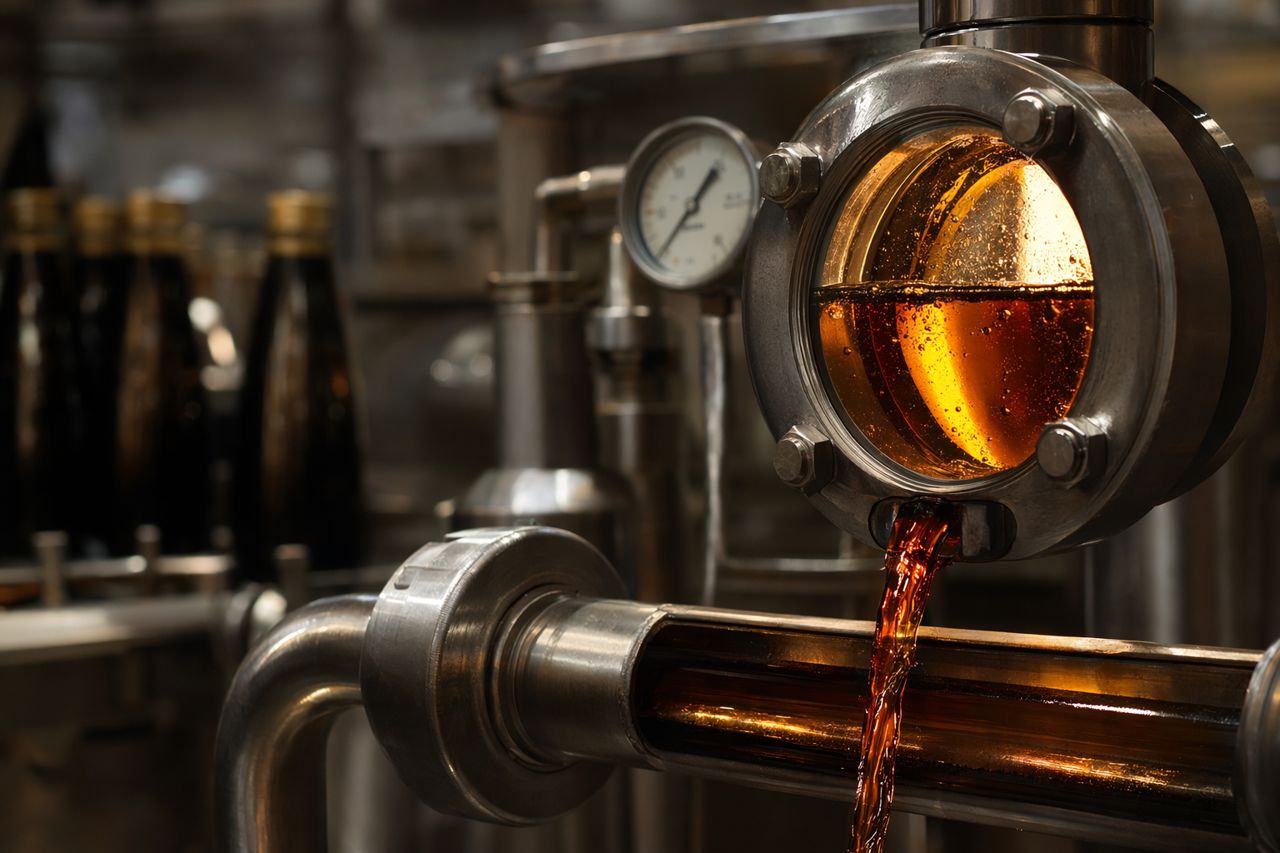
Moromi Pulse supplies enzyme solutions for soy sauce breweries that need controlled hydrolysis, not generic acceleration. Our work is built around the realities of koji-based production: salt, solids, viscosity, tank timing, flavor expectations, and downstream separation behavior.
We support fermentation teams with application-focused guidance, including:
- enzyme selection by process objective;
- dosage range development based on plant conditions;
- introduction point and dispersion recommendations;
- batch comparison planning;
- monitoring priorities tied to flavor, nitrogen release, viscosity, and filtration behavior;
- scale-up thinking for production tanks, not just bench observations.
The aim is simple: help the brewery make hydrolysis more predictable while protecting the character of the sauce.
Signs your plant should review hydrolysis control
Consider a hydrolysis review if your team is seeing any of the following:
- similar koji batches behaving differently in moromi;
- extended fermentation time needed to reach flavor or nitrogen targets;
- mash viscosity interfering with mixing, transfer, or sampling;
- filtration or pressing slowdowns without a clear mechanical cause;
- batch-to-batch variation that requires frequent blending correction;
- raw material changes creating disproportionate process effects;
- operators relying on informal adjustments to keep tanks moving.
These are not just quality issues. They are throughput and control issues.
A controlled next step
If koji mash hydrolysis is becoming a constraint in your brewery, Moromi Pulse can help evaluate where enzyme support may fit without disrupting the identity of your process.
Use the on-site request form to share your production goals, mash conditions, and current bottleneck. We will respond with a practical quote pathway and application discussion for your soy sauce fermentation line.
Request a quote through the on-site form