Where Yield Losses Hide in Soy Sauce Brewing | Moromi Pulse
Map hidden yield losses from koji room to moromi tank, with practical enzyme support for nitrogen release, viscosity control, fermentation time, and pressing behavior.
Request pricing Map hidden yield losses from koji room to moromi tank, with practical enzyme support for nitrogen release, viscosity control, fermentation time, and pressing behavior.
Request pricingIndustrial soy sauce yield is rarely lost in one obvious failure. It is usually shaved away in small, compounding moments: a soybean core that does not open fully, a koji bed that grows unevenly, a brine mix that locks up viscosity, a moromi tank that releases nitrogen slowly, or a press cycle that leaves soluble value in the cake.
For a fermentation manager, the question is not simply whether the mash fermented. The question is whether the brewery recovered the flavor potential already paid for in soybeans, wheat, salt, tank time, labor, and press capacity.
Moromi Pulse works as an enzyme supplier for soy sauce fermentation with that plant-floor reality in mind. Enzyme support is not a shortcut around traditional quality. Used correctly, it is a control tool for improving extraction, stabilizing fermentation behavior, and protecting the sensory profile that defines the brewery.
Most yield discussions start too late. By the time moromi viscosity is high or pressing slows, the root cause may already be upstream.
Soy sauce brewing asks raw materials to move through several transformations before soluble umami is recovered: hydration, steaming, roasting, crushing, koji propagation, brine addition, fermentation, maturation, pressing, clarification, and finishing. Each step changes how accessible protein, starch, and cell-wall structures will be in the next step.
A useful yield audit follows the material, not the department boundary.
Soybeans and wheat carry the nitrogen and carbohydrate base for the brew, but that value must be made accessible.
When protein structures are not opened consistently, later enzymatic hydrolysis becomes less predictable. The result can be slower nitrogen release, uneven flavor development, or a need to extend fermentation time to reach the same target profile.
A well-matched protease and carbohydrase strategy can improve soluble extraction from the prepared substrate without forcing aggressive process changes. The practical value is steadier release across raw material variation, especially when the brewery is balancing heritage flavor expectations with modern throughput pressure.
The key is discipline. Enzymes should be selected around the actual substrate condition, salt environment, process temperature, fermentation time, and desired flavor curve, not used as a generic addition.
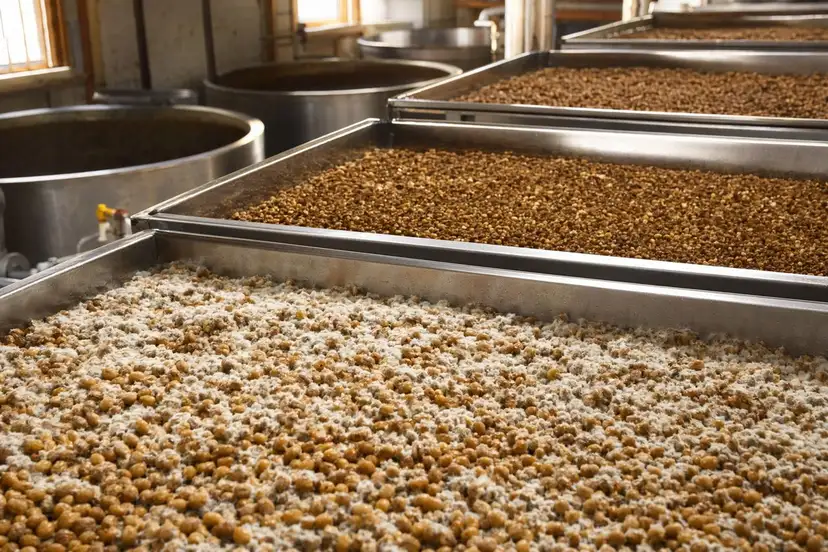
A healthy-looking koji bed is necessary, but visual growth alone does not guarantee efficient downstream extraction.
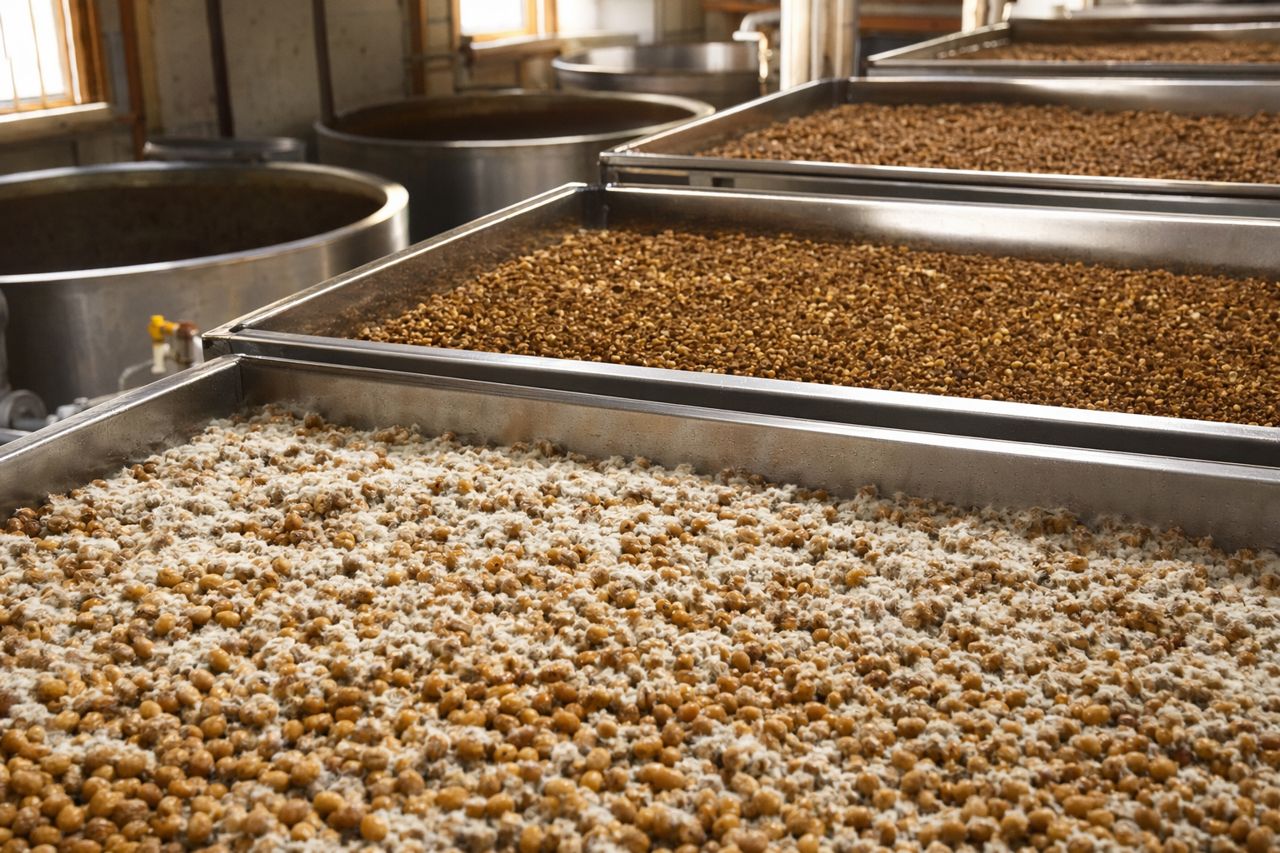
Koji performance is shaped by moisture, aeration, temperature distribution, bed depth, inoculation uniformity, and turning practice. Small inconsistencies can create zones with different hydrolysis potential. Those differences may not become obvious until the moromi behaves unevenly in the tank.
If koji growth is uneven, the brewery may see one of two costly patterns. Some tanks require more time to reach flavor targets. Others reach acceptable flavor but leave recoverable soluble material behind in the press cake. Both patterns reduce effective yield.
Supplemental enzyme systems can help smooth this variability, but they should complement the koji program rather than mask poor koji control. The best results come when enzyme selection is paired with a clear understanding of koji condition and moromi residence time.
The move from koji room to moromi tank is often treated as logistics. In practice, it is a conversion point.
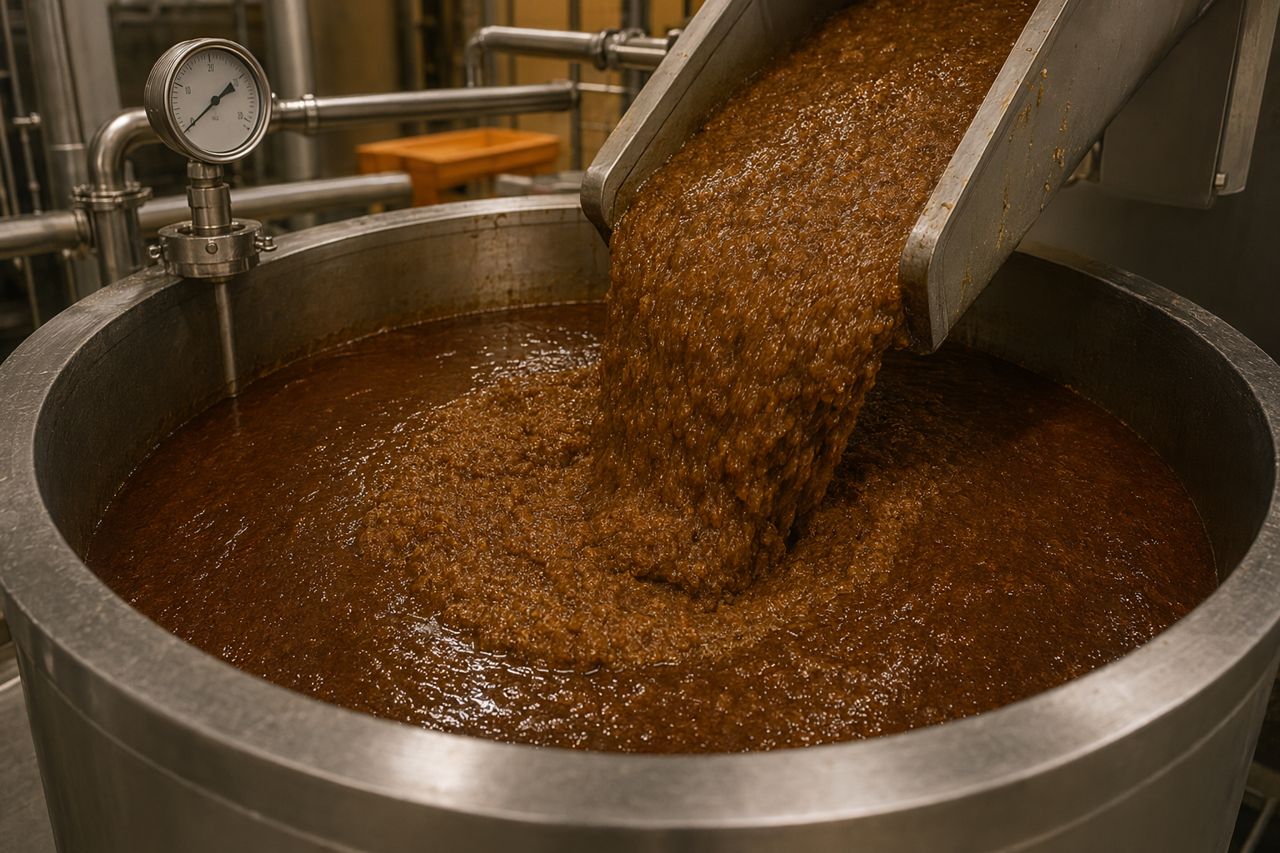
Brine addition changes water activity, salt stress, substrate swelling, and microbial conditions. The mash can thicken quickly depending on particle structure, residual starch behavior, and cell-wall materials. Once viscosity rises, the brewery pays for it in pumping energy, sampling difficulty, slower mixing, uneven fermentation zones, and eventually press-house drag.
Targeted carbohydrate and protein hydrolysis can reduce the tendency of moromi to become overly resistant while preserving the body expected in the finished sauce. The goal is not a thin or stripped mash. The goal is controlled viscosity, improved accessibility, and fewer mechanical penalties during the long fermentation.
Moromi is where yield and quality become inseparable. Faster extraction is not valuable if it creates harshness, imbalance, or a flavor curve that conflicts with the brewery standard.
In industrial brewing, the best enzyme programs are designed around controlled release. Proteins need to open into savory, umami-rich fractions. Carbohydrates need to support fermentation behavior without creating instability. The mash must remain manageable enough for sampling, monitoring, and eventual pressing.
A practical enzyme program defines where the enzyme enters, what process window it must tolerate, how dosage is controlled, and what production signal confirms value. For soy sauce breweries, those signals often include fermentation time, soluble extraction, flavor consistency, viscosity behavior, press performance, and reduced variation between tanks.
This is where supplier fit matters. A plant-floor credible supplier should understand that fermentation managers are not buying enzymes in isolation. They are buying a more predictable moromi.
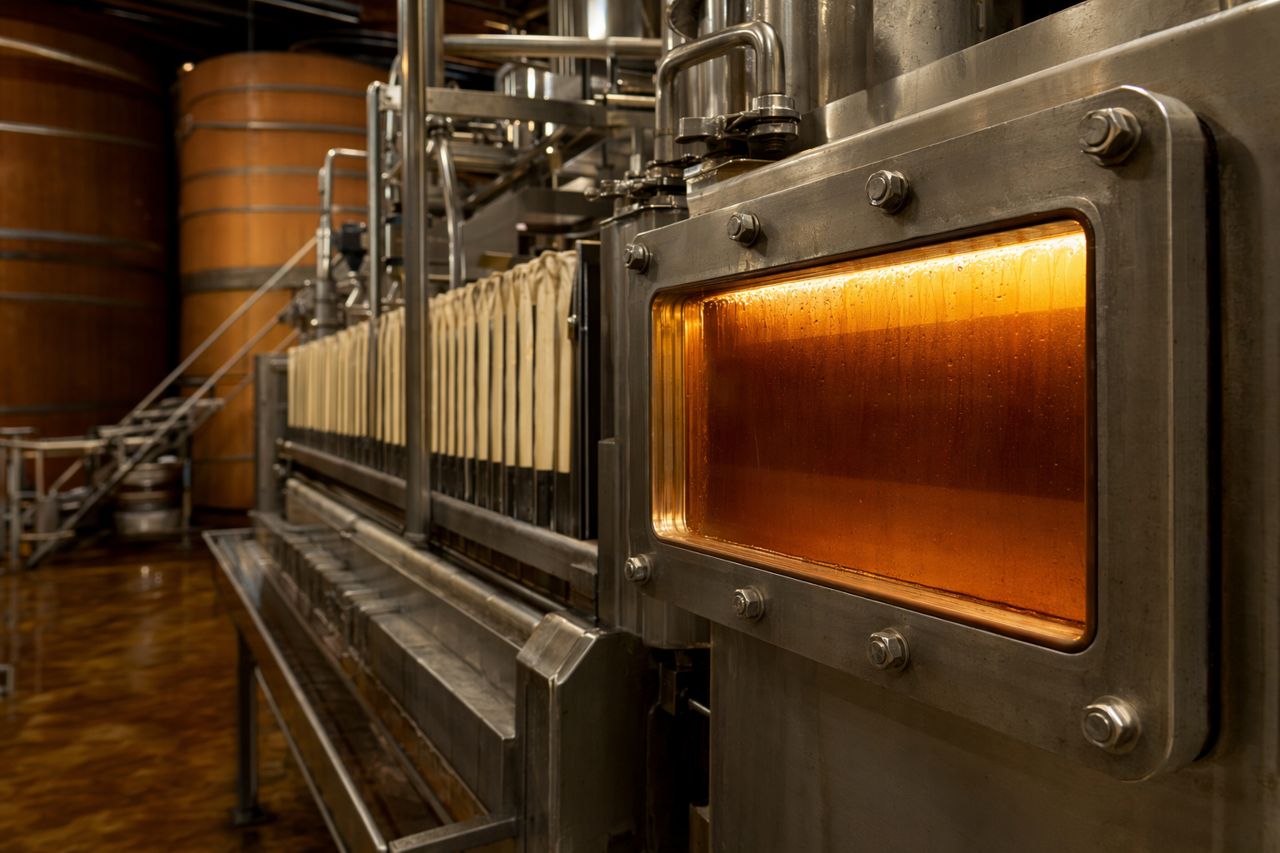
Pressing is where upstream decisions become visible. A moromi that fermented adequately can still lose value if the press cake retains too much soluble material or if filtration slows production.
These issues often trace back to particle breakdown, viscosity, fines, and incomplete hydrolysis. Enzyme support cannot fix every mechanical constraint, but it can improve the material presented to the press.
A cleaner-flowing moromi can support better drainage, more stable filtration, and less value left behind in solids. For breweries working near press capacity, that improvement can matter as much as tank yield.
Not every yield problem calls for enzyme intervention. Some belong to raw material purchasing, equipment maintenance, koji room control, or press operation. But enzyme support is worth evaluating when several of these patterns appear together:
These are not abstract laboratory concerns. They are production signals that affect schedule reliability, raw material efficiency, labor load, and customer consistency.
Moromi Pulse does not start with a catalog recommendation. We start with the brewery map.
A typical technical review looks at:
From there, we identify where enzyme support can create measurable production value without disrupting the identity of the sauce.
The most effective programs are usually simple: clear purpose, controlled dosage, consistent addition point, documented process response, and review across multiple batches. Complexity is not the goal. Repeatability is.
Soy sauce brewing carries deep craft knowledge. Industrial consistency should not flatten that character. The right enzyme approach respects the brewery standard while helping the plant reduce avoidable losses.
That means:
Good yield improvement should taste like the brewery intended, only with fewer surprises along the way.
If your team is investigating yield loss between the koji room, moromi tank, and press house, Moromi Pulse can help evaluate where enzyme support fits your process window.
Share your raw material flow, fermentation targets, viscosity concerns, press behavior, and batch-to-batch variation patterns. We will recommend a practical starting point for controlled trials and production-scale review.
Request a quote to discuss enzyme support for your soy sauce brewery.
Tell us your application and volume — we reply with pricing and lead time.